
Why GIA Certification Matters More Than Ever in Today’s Market
Why GIA Certification Matters More Than Ever in Today's Market
The diamond market has never been more complex. Lab-grown diamonds reach quality levels indistinguishable from natural stones. Online retailers sell diamonds consumers never physically see. Synthetic treatments enhance color and clarity invisibly. In this environment, independent certification has evolved from luxury to necessity.
For those looking to buy engagement ring in Dubai or anywhere globally, GIA (Gemological Institute of America) certification represents the most important quality assurance available. At Reve Diamonds, where we work exclusively with natural, GIA-certified diamonds, our third-generation Antwerp heritage taught us that diamonds trade on trust-but trust requires verification.
What GIA Certification Provides
GIA operates as a nonprofit research institution established in 1931, maintaining complete independence-they don't buy, sell, or value diamonds. Their sole function is objective assessment.
What GIA Certificates Document
The Four Cs:
- Carat Weight: Precise measurement to the hundredth of a carat
- Color Grade: D (colorless) through Z (light yellow/brown)
- Clarity Grade: Flawless (FL) through Included (I3)
- Cut Grade: For round brilliants, Excellent to Poor
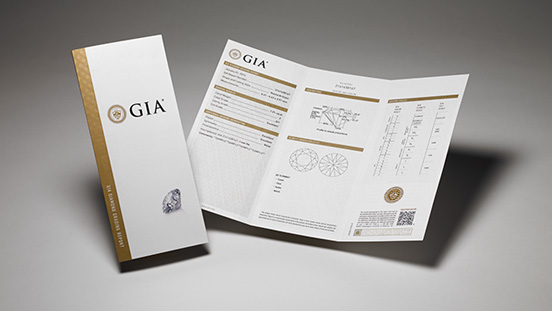
Additional Data: Polish, symmetry, fluorescence, precise measurements, proportions, and a plotting diagram showing inclusion locations-essentially the diamond's fingerprint.
What Certificates Don't Provide
Critically, GIA certificates don't appraise value, guarantee satisfaction, or assess provenance. They document objective characteristics-two diamonds with identical grades can have different market values based on nuanced qualities beyond certificate scope.
Why Certification Matters More Now
Lab-Grown Diamond Reality
Lab-grown diamonds now match natural stone quality perfectly. Without specialized equipment, even gemologists cannot distinguish them. GIA certification verifies natural origin-standard reports indicate natural diamonds; lab-grown receive clearly marked separate reports.
Online Purchasing Growth
Buying without physical examination requires objective verification. GIA certification provides data independent of seller descriptions, verifiable through GIA's website.
Treatment Technologies
Advanced treatments (HPHT color improvement, laser drilling, fracture filling) can enhance diamonds. GIA documents all treatments, preventing buyers from paying natural stone prices for treated diamonds.
International Supply Chains
Modern diamonds might travel from Botswana mines through Dubai trading to Indian cutting to New York wholesale. GIA maintains consistent standards globally-a diamond graded in Mumbai receives identical assessment to one graded in Antwerp or Dubai.
Understanding the GIA Grading Scale
Color Grading Essentials
D-E-F (Colorless): No detectable color. Premium pricing for rarity (1-2% of diamonds).
G-H-I-J (Near Colorless): The "sweet spot"-slight color only visible to trained eyes in controlled conditions. Excellent appearance at significantly lower cost. In yellow or rose gold settings, even J color appears white.
K-M (Faint Color): Visible yellow tint, especially in larger stones. Work well in yellow gold.
Critical Insight: Within each grade, variation exists. A "high" G appears nearly identical to F; a "low" G closer to H. Experienced suppliers recognize these nuances beyond what certificates show.
Clarity Grading Realities
FL-IF (Flawless/Internally Flawless): Extremely rare (<1%). Premium often unjustified since differences are microscopic.
VVS1-VVS2: Minute inclusions difficult to see under 10x magnification. Essentially eye-clean.
VS1-VS2: Optimal value-minor inclusions under magnification, typically eye-clean in normal viewing.
SI1-SI2: Noticeable under magnification. SI1 often eye-clean; SI2 sometimes shows inclusions. Requires careful evaluation based on inclusion type and position.
I1-I3: Obvious inclusions affecting appearance and potentially durability.
Key Point: Clarity grades don't specify inclusion types. Black carbon spots differ dramatically from white feathers. This is where expertise matters.
Cut: Why It Matters Most
For round brilliants, cut grades (Excellent to Poor) assess light return optimization. A perfectly cut H/VS2 typically appears more beautiful than a poorly cut E/VVS1. Cut determines brilliance-color and clarity just ensure nothing detracts from it.
Practical Guide:
- "Excellent" cut produces maximum brilliance
- "Very Good" performs nearly identically
- "Good" shows visible compromises
- Avoid "Fair" and "Poor"
Verifying Certificate Authenticity
Online Check: Visit GIA.edu and enter the report number to confirm it exists and verify the 4Cs.
Physical Features: Legitimate reports include holographic foil, security screen, microprint lines, and QR codes.
Laser Inscription: Most GIA diamonds over 0.30ct have the report number inscribed on the girdle-verify it matches the certificate.
When buying from reputable suppliers like Reve Diamonds, authenticity is assured, but independent verification provides additional confidence.
GIA vs. Other Certifications
IGI (International Gemological Institute): Slightly less conservative than GIA. Legitimate and widely accepted, particularly in Asia and Europe, but GIA commands 5-10% premium for equivalent grades.
HRD Antwerp: Respected in Europe, particularly for larger stones.
EGL: Avoid. Inconsistent standards across different EGL entities. Stones often graded 2-3 levels better than GIA would assign.
AGS: Highly respected in US, excellent cut grading, but smaller market presence than GIA.
Reve Diamonds' Policy: We work exclusively with GIA certification. Decades of experience taught us that GIA's consistency and international recognition provide optimal client confidence.
Using Certificates for Informed Purchasing
GIA's standardized grading enables direct comparison. Price variations between similar-graded diamonds reflect market position, overhead costs, and specific stone characteristics (inclusion types, fluorescence) beyond basic grades.
Key Insights:
- Each color grade improvement adds 10-15% to value, but visual differences between adjacent grades are subtle
- VS2 to VS1 adds 5-10% cost with often imperceptible visual difference
- Excellent cut vs. Very Good adds 5-10% but significantly impacts beauty-money well spent
- Certificates provide foundation but don't show actual appearance, inclusion nature, or fluorescence effects
This nuanced interpretation is where expertise matters. Third-generation diamantaires like those at Reve Diamonds provide guidance about which specific stones excel beyond their certificates.
GIA Certification and Ethical Sourcing
GIA addresses quality, not ethics. For ethical assurance, request:
- Kimberley Process Certification (conflict-free status)
- RJC Certification (audited ethical practices-Reve Diamonds maintains RJC certification)
- Provenance documentation or blockchain tracking
Optimal sourcing combines GIA quality verification with ethical compliance documentation.
Conclusion
GIA certification provides essential foundation for confident diamond purchasing-verification that you're getting the quality you're paying for in today's complex market with lab-grown diamonds, sophisticated treatments, and international supply chains.
However, optimal purchasing combines certification with expertise. Working with knowledgeable suppliers who interpret nuanced differences between certificated stones, ethical verification through RJC and Kimberley Process compliance, and actual viewing (in person or through quality imaging) creates truly confident purchasing.
When you buy engagement ring in Dubai from Reve Diamonds, you access: exclusively natural GIA-certified diamonds (verification), RJC certification (ethical assurance), third-generation Antwerp expertise (nuanced guidance), and Dubai's cost-efficient infrastructure (value). GIA certificates provide the critical foundation, but the combination of certification, expertise, and accountability creates confident purchasing in an increasingly complex market.
Frequently Asked Questions
Is GIA certification worth the cost when buying a diamond?
Absolutely. GIA certification typically costs $80-200 depending on diamond size but enables significantly higher resale value (20-30% more than uncertified equivalents) and provides fraud protection worth far more than certification cost. For engagement ring center stones (typically 0.50-3.00ct), certification should be automatic-lack of GIA certification for diamonds in this range signals potential quality misrepresentation. The certificate provides objective verification independent of seller claims, critical when spending thousands on items you may lack expertise to evaluate independently. In today's market with lab-grown diamonds reaching natural quality levels and sophisticated treatments becoming commonplace, GIA certification provides verification no seller promises can match. When working with Reve Diamonds, all our natural diamonds come GIA-certified as standard because we recognize certification as essential protection, not optional luxury. The minimal certification cost protects against fraud worth potentially tens of thousands of dollars.
How do I verify if a GIA certificate is real or fake?
Verify GIA certificate authenticity through multiple methods. First, use GIA's online Report Check at GIA.edu-enter the report number to confirm it exists in GIA's database and verify the 4Cs match your certificate. Second, examine physical security features: holographic foil that reflects rainbow colors when tilted, security screen background visible at angles, microprint lines appearing as lines to naked eye but readable under magnification, and QR code linking to GIA's database. Third, check for laser inscription on the diamond's girdle (edge) using a jeweler's loupe-most GIA-certified diamonds over 0.30ct receive inscription of the report number, which should match the certificate. Fourth, examine printing quality-legitimate GIA reports show professional, precise printing without blurring. If purchasing through reputable suppliers like Reve Diamonds, certificate authenticity is assured, but independent verification provides additional confidence. Be particularly cautious with EGL certificates or in-house certifications, which lack GIA's verification standards.
What's the difference between GIA and IGI diamond certification?
GIA (Gemological Institute of America) and IGI (International Gemological Institute) both provide legitimate diamond certification, but with important differences. GIA maintains slightly more conservative grading standards-a diamond graded F color by IGI might receive G from GIA. This matters for pricing comparisons: GIA-certified diamonds typically command 5-10% premium over equivalent IGI grades because the market recognizes GIA's consistency. GIA operates as nonprofit focused purely on gemological research and education, while IGI operates commercially. For resale and insurance purposes, GIA certification provides stronger market acceptance, particularly in North American markets. However, IGI provides respected certification, particularly in Asian and European markets and for lab-grown diamonds where IGI has invested heavily. For high-value purchases (engagement rings, investment stones), GIA certification offers maximum confidence and resale value. At Reve Diamonds, we work exclusively with GIA-certified natural diamonds because decades of experience taught us that GIA's consistency and international recognition provide optimal client confidence.
Can a diamond have good GIA grades but still look bad?
Yes, absolutely. GIA certificates document objective characteristics but not subjective appeal or certain visual qualities. Two diamonds with identical GIA grades (same carat, color, clarity, cut) can look noticeably different due to factors like: inclusion type and position (white clouds versus black carbon spots, edge versus table inclusions), fluorescence effects (some stones with "medium" fluorescence appear slightly hazy, others show no visible impact), color distribution (some near-colorless stones show localized color tints despite overall grade), and cut quality nuances (within "Excellent" cut grade, significant variation exists in brilliance optimization). Additionally, some SI2 clarity diamonds show obvious inclusions while others remain eye-clean depending on inclusion characteristics. This is why certificates provide foundation but not complete evaluation. Working with experienced suppliers like Reve Diamonds with third-generation expertise means accessing guidance about which specific certificated stones excel beyond their "paper grades" and which underperform despite acceptable certificates.
Why do some jewelers avoid GIA certification?
Legitimate reasons include: small stones under 0.30ct where certification cost represents too large a percentage of stone value, lower-quality commercial-grade diamonds not worth certification expense, or estate jewelry predating modern certification practices. However, suspicious reasons exist: some jewelers avoid GIA certification because stones wouldn't grade as well as they're representing-certification would reveal this, destroying sale value. For example, a jeweler claiming a stone is "VS1 quality" might avoid certification knowing it would grade SI1, requiring price adjustment. Others work with less rigorous laboratories (like EGL) that grade more generously, allowing them to represent stones as higher quality than they actually are. For typical engagement ring center stones (0.50-3.00ct), GIA certification should be automatic. Lack of GIA certification in this range deserves skepticism unless the seller provides compelling explanation. When jewelers like Reve Diamonds work exclusively with GIA-certified stones, it signals confidence in quality and commitment to transparency-certification provides verification beyond seller promises.
Does GIA certification guarantee my diamond is natural, not lab-grown?
Yes, with important nuance. Standard GIA Diamond Grading Reports assume natural origin-if you receive a standard report, the diamond is natural. However, lab-grown diamonds receive separate GIA reports clearly marked "Laboratory-Grown Diamond" with different report number prefixes (beginning with LG). The critical requirement is verifying certificate authenticity-sophisticated fraud could involve pairing lab-grown diamonds with counterfeit natural diamond certificates. Use GIA's online Report Check to verify the certificate exists in their database, examine physical security features on the certificate, and check for laser inscription on the diamond's girdle matching the report number. When purchasing from reputable suppliers like Reve Diamonds specializing in natural, GIA-certified diamonds with RJC certification for ethical practices, you're accessing multiple verification layers. Lab-grown diamonds have legitimate markets but should never be represented as natural-GIA's separate reporting system prevents this fraud when certificates are authentic and properly matched to the actual diamond.
How much does GIA certification affect diamond resale value?
GIA certification typically adds 20-30% to resale value compared to uncertified diamonds with equivalent quality. This premium reflects buyer confidence in objective, third-party verification-potential buyers don't have to trust your quality claims because GIA provides independent assessment. Additionally, GIA's international recognition means certified diamonds have liquid markets globally, while uncertified stones face regional limitations and skeptical buyers. When reselling through auction houses, dealers, or private sales, GIA certification eliminates the need for re-evaluation and grading, speeding transactions and reducing friction. IGI certification provides similar benefits but typically commands 5-10% less premium than GIA due to GIA's slightly more conservative grading reputation. Diamonds with EGL or in-house certifications receive minimal resale premium because sophisticated buyers don't trust those grading standards. For long-term value preservation and resale flexibility, GIA certification represents essential investment-the $80-200 certification cost during initial purchase protects resale value worth thousands later.
