
The Role of Antwerp in the Global Diamond Supply Chain
The Role of Antwerp in the Global Diamond Supply Chain
For over five centuries, Antwerp has held a singular position in the diamond trade-not through government decree or accident of geography, but through accumulated expertise, trust networks, and institutional knowledge passed across generations. When clients buy engagement ring in Dubai from jewelers with Antwerp heritage like Reve Diamonds, they're accessing expertise refined over centuries in the world's most demanding diamond market. Understanding Antwerp's role illuminates what separates genuine diamond expertise from retail jewelry sales.
The city's diamond story intertwines with broader economic history: the rise of global trade networks, the development of modern finance, the evolution of craftsmanship, and how specialized knowledge concentrates in specific locations. Antwerp's continued relevance-despite competition from Dubai, Mumbai, and Tel Aviv-demonstrates that in industries requiring extreme expertise and trust, tradition carries tangible value.
Historical Foundations: How Antwerp Became the Diamond Capital
Antwerp's diamond prominence dates to the 15th century, though the industry's true consolidation occurred in the late 19th century. Understanding this history explains why the city maintains advantages competitors struggle to replicate.
Early Diamond Trade Routes
Diamonds reached Europe from India (the world's only known source until the 18th century) through Venice and Bruges initially. Antwerp's rise as a trading port, combined with its position at the crossroads of European trade routes, made it a natural commercial center. By the 1500s, Antwerp had established itself as Europe's primary diamond cutting and trading location.
The city's early advantage came from institutional innovation rather than resource access. Antwerp's merchants developed sophisticated financial instruments-bills of exchange, letters of credit, insurance mechanisms-that facilitated long-distance trade in high-value, low-volume commodities like diamonds. These financial innovations mattered as much as cutting expertise.
The Guild System and Knowledge Transfer
Medieval guild structures created formal apprenticeship systems ensuring knowledge transfer across generations. Diamond cutting and evaluation skills-how to read crystal structures, determine optimal cutting directions, assess quality-couldn't be learned from books. They required years of hands-on training under master craftsmen.
This apprenticeship model persists today. Many Antwerp diamond families trace their involvement back four, five, even six generations. The knowledge accumulated over these generations-understanding nuanced quality differences, relationships with specific mines or cutting centers, expertise in rare diamond types-represents competitive advantage that new market entrants cannot quickly acquire.
The Jewish Diamond Trade
Antwerp's diamond trade became particularly associated with Jewish merchants, especially after Sephardic Jews fleeing Spanish and Portuguese persecution arrived in the 16th century. Later waves, including Ashkenazi Jews from Eastern Europe, reinforced this connection.
This wasn't coincidental. Diamond trading requires extraordinary trust-transactions often occur based on verbal agreements for stones worth hundreds of thousands of dollars. Close-knit communities with strong internal accountability mechanisms facilitated this trust. The phrase "mazel und bracha" (luck and blessing in Yiddish) sealed deals in Antwerp's diamond district for generations, often without written contracts.
Today, while Antwerp's diamond trade has diversified considerably, this heritage of trust-based transactions remains central to how the city operates. Reputation matters more than formal contracts-a dealer who cheats once finds themselves excluded from networks built over centuries.
Antwerp's Role in the Modern Diamond Pipeline
Understanding Antwerp requires mapping where it sits in the global diamond supply chain, which has evolved considerably but retains Antwerp's central role in specific functions.
Rough Diamond Trading
Historically, Antwerp was a primary rough diamond trading center where stones from mines reached cutters. While this role has partially shifted (Dubai and Tel Aviv now handle significant rough volumes), Antwerp remains critical for certain rough categories:
Exceptional Stones:
Large, high-quality rough diamonds-particularly stones over 10 carats that will yield investment-grade polished diamonds-still flow disproportionately through Antwerp. The expertise to evaluate these stones and the capital to purchase them concentrates in Antwerp's established dealers.
Fancy Color Rough:
Rare colored diamonds (pink, blue, red, green) require specialized evaluation and cutting expertise. Antwerp houses many of the world's few dozen experts capable of assessing fancy color rough and determining optimal cutting approaches. These stones are too valuable and specialized to risk with less experienced evaluators.
Specialized Parcels:
Certain rough diamond types-such as Type IIa diamonds (the purest diamond type, completely colorless) or stones suitable for specific cutting styles-flow through Antwerp networks where buyers with particular expertise or market connections operate.
Cutting and Polishing Excellence
While India dominates diamond cutting by volume (processing approximately 90% of rough diamonds by weight), Antwerp maintains supremacy in high-value cutting:
Large Stone Expertise:
Cutting diamonds over 5 carats requires different expertise than smaller stones. The stakes increase dramatically-an error in planning or execution can cost hundreds of thousands of dollars. Antwerp cutters specialize in these high-value stones where their premium fees are justified by risk and expertise.
Complex Shapes:
Fancy shapes like Asscher cuts, emerald cuts, or heart shapes require greater skill than round brilliants. Antwerp's master cutters trained for years specifically in these complex geometries.
Symmetry and Polish Perfection:
Achieving GIA "Excellent" ratings for both symmetry and polish requires painstaking precision. While Indian cutters can achieve this, Antwerp's culture emphasizes perfection over speed-appropriate for stones where maximizing value matters more than processing volume.
Recut and Restoration:
Antique diamonds requiring recutting or damaged stones needing restoration typically return to Antwerp. The expertise to work with already-cut stones differs from cutting rough-you're correcting problems with limited material remaining, requiring exceptional skill.
Quality Evaluation and Certification
Antwerp hosts one of the world's most important GIA (Gemological Institute of America) laboratories. The HRD Antwerp (formerly Hoge Raad voor Diamant) also provides respected certification, particularly for larger stones.
Beyond formal certification, Antwerp's community includes independent evaluators and consultants who provide specialized services:
Second Opinions:
For extremely valuable stones, buyers often seek multiple expert opinions before purchase. Antwerp houses numerous independent evaluators trusted for impartial assessment.
Specialty Expertise:
Evaluating fancy colored diamonds, fluorescence impact assessment, or determining whether slight inclusions justify specific clarity grades-these specialized evaluations happen in Antwerp where concentrated expertise exists.
Historical Documentation:
For antique jewelry or diamonds with historical significance, Antwerp experts can often trace provenance, identify cutting periods, or authenticate age based on cutting characteristics.
The Antwerp Diamond District: Physical Infrastructure
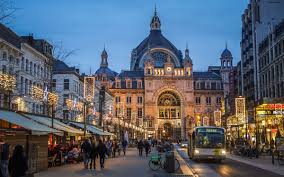
Antwerp's diamond trade concentrates in a few city blocks around Central Station and Pelikaanstraat-one of the world's highest-density concentrations of wealth in such a small area.
The Diamond Square Mile
Four main streets define Antwerp's diamond district: Hoveniersstraat, Schupstraat, Rijfstraat, and Pelikaanstraat. Within these blocks:
Over 1,500 diamond companies operate, from single-proprietor dealers to major international trading houses.
Four diamond bourses provide formal trading floors where members conduct transactions. The Antwerp Diamond Bourse, Beurs voor Diamanthandel, Vrije Diamanthandel, and Diamantclub van Antwerp each have specific membership profiles and trading specializations.
Banking facilities specialized in diamond financing, providing credit lines against diamond inventory and facilitating high-value international transactions.
Security infrastructure including armored transport services, specialized vaults, and private security throughout the district.
Support services from specialized accountants and lawyers to insurance providers and logistics companies-all understanding diamond trade's specific requirements.
This concentration matters. A dealer can walk between buildings, physically showing parcels to multiple potential buyers within an hour. This velocity impossible in fragmented markets creates market efficiency that benefits both buyers and sellers.
The Bourse System
Antwerp's diamond bourses function differently than stock exchanges. They're essentially private clubs where members conduct transactions on trading floors designed for diamond examination-proper lighting, secure viewing areas, negotiation spaces.
Membership requires sponsorship by existing members and vetting for financial stability and ethical conduct. This gatekeeping maintains trust levels essential for high-value transactions often conducted with minimal documentation.
The bourses provide:
- Neutral territory for transactions between parties who may not know each other personally
- Arbitration services for disputes, with industry experts making binding decisions
- Trading infrastructure including lighting, scales, loupes, and examination equipment
- Market information through formal and informal price discovery mechanisms
For someone like Arav Mehta of Reve Diamonds, raised in this environment as a third-generation diamantaire, the bourses represent professional formation-where he learned to evaluate stones, negotiate transactions, and build relationships that later enabled establishing operations in Dubai.
Antwerp's Competitive Advantages
Despite competition from lower-cost centers, Antwerp maintains distinct advantages that sustain its relevance.
Unmatched Expertise Concentration
Nowhere else concentrates comparable diamond expertise in such small geography. Need someone who specializes in pre-1920 Old European cuts? There are experts in Antwerp. Looking for someone who can evaluate Type IIb diamonds (the rarest type, naturally blue)? Antwerp has the world's small handful of true experts.
This expertise concentration creates self-reinforcing advantages. Specialized problems flow to where specialized experts exist. This transaction flow maintains those experts' viability, ensuring they remain available when needed.
Trust Networks and Reputation Systems
Antwerp's diamond trade still operates substantially on trust and reputation rather than formal contracts. This seems anachronistic until you understand the efficiency it creates.
Diamonds worth $500,000 change hands based on verbal agreements sealed with "mazel und bracha." Written contracts follow, but the transaction is functionally complete before paperwork. This requires trust systems built over generations-everyone knows who can be trusted absolutely, who requires caution, and who should be avoided.
These reputation systems provide quality assurance that formal mechanisms struggle to match. A dealer who misrepresents even once faces professional death-exclusion from networks that took generations to build. This incentive structure keeps honesty levels remarkably high.
Access to Exceptional Stones
The world's most valuable diamonds still flow through Antwerp with greater frequency than anywhere else. When major auction houses like Christie's or Sotheby's sell important colored diamonds or exceptional white stones, they often come to Antwerp first-where buyers with sufficient capital and expertise to evaluate properly concentrate.
For jewelry houses creating exceptional pieces-engagement rings featuring rare fancy colored diamonds, statement necklaces with perfectly matched large stones-Antwerp access remains valuable. You can find quality diamonds in Dubai, Mumbai, or New York, but finding truly exceptional stones requires Antwerp's networks.
Historical Knowledge and Documentation
Antwerp dealers often possess historical knowledge about significant stones. When famous diamonds reappear at auction or in estate sales, Antwerp experts can sometimes identify them based on cutting characteristics, trace previous ownership, or provide context about historical significance.
This knowledge matters for collectors and investors where provenance affects value. A diamond known to have been owned by royalty or featured in important jewelry commands premiums-but establishing provenance requires access to historical records and expertise that concentrates in Antwerp.
The Mumbai-Antwerp Connection
Understanding Antwerp requires understanding its relationship with Mumbai and Surat, where the vast majority of diamond cutting now occurs.
Why Cutting Shifted to India
Diamond cutting moved to India over the late 20th century for straightforward economic reasons: labor costs. Cutting diamonds is labor-intensive skilled work. Indian cutting centers could train workers to achieve quality comparable to European cutters while maintaining wage structures far below Western levels.
Initially, Indian cutting focused on smaller stones and simpler shapes-the mass market for diamonds under one carat. As expertise developed, Indian cutters mastered increasingly large and complex stones. Today, Indian facilities cut stones that would have been Antwerp-exclusive work thirty years ago.
What Remains in Antwerp
Antwerp hasn't disappeared-it's specialized. The cutting work remaining in Antwerp represents:
Ultra-high-value stones where cutting fees (higher in Antwerp) represent tiny percentages of stone value, making absolute expertise more important than cost.
Extreme complexity where risk management justifies Antwerp's premium pricing-better to pay $50,000 for cutting expertise than risk a $2 million stone with less experienced cutters.
Client preference where buyers specifically want Antwerp cutting for prestige reasons or because they trust Antwerp cutters with their particular stones.
Specialty work like recutting or restoration where the problems being solved require experience Indian cutters may lack.
Complementary Rather Than Competitive
Modern diamond trade typically involves both centers: rough purchased in Antwerp (or Dubai/Tel Aviv), sent to India for cutting, returned to Antwerp for certification and sale to high-end jewelry manufacturers or dealers.
This geographic division leverages each location's advantages. India provides efficient, quality cutting at competitive prices. Antwerp provides expertise evaluation, certification, and access to end buyers in luxury markets.
For companies like Reve Diamonds, this complementary relationship means accessing both: Antwerp connections for specialized stones requiring exceptional cutting expertise, Indian cutting centers for efficient volume production of standard shapes-selecting the right resource for each stone's requirements.
Antwerp in the Modern Supply Chain
Today's diamond supply chain is truly global, with Antwerp maintaining specific roles rather than controlling all aspects as it once did.
From Mine to Market: Where Antwerp Fits
1. Mining:
Diamonds are extracted in Botswana, Russia, Canada, Angola, South Africa, Australia, and other locations. Antwerp has limited direct involvement here, though some Antwerp dealers maintain direct relationships with smaller producers.
2. Rough Trading:
Major mining companies (De Beers, ALROSA, Rio Tinto) historically sold through Antwerp. Today, sales occur through multiple channels including Dubai, Tel Aviv, and direct sales to large Indian cutting operations. Antwerp remains important for specialized rough and secondary market trading.
3. Cutting:
As discussed, mostly India by volume, but Antwerp for specialized work.
4. Certification:
GIA, IGI, and HRD certify in multiple locations including Antwerp, which maintains importance for larger, high-value stones.
5. Wholesale Trading:
Antwerp remains a primary market for polished diamond wholesale trading, particularly for investment-grade stones. Dubai has captured significant market share here, but Antwerp maintains advantages for exceptional stones.
6. Retail:
End consumers rarely engage with Antwerp directly-it's a wholesale market. Retail occurs globally, though jewelry houses sourcing from Antwerp benefit from the city's expertise and inventory access.
When you buy engagement ring in Dubai from Reve Diamonds, stones might have touched Antwerp during their journey-perhaps rough evaluation there, or cutting by Antwerp-trained specialists, or sourcing through Antwerp networks even if physical transaction occurred in Dubai.
Antwerp's Challenges and Adaptations
Antwerp faces real competitive pressures requiring adaptation to maintain relevance.
High Cost Structure
Belgium's tax regime, expensive real estate in the diamond district, and high labor costs create structural cost disadvantages. An identical transaction in Dubai saves money through zero VAT, zero corporate tax, and lower operational expenses.
Antwerp addresses this by specializing in higher-value transactions where absolute expertise justifies premium costs. For a $10,000 diamond, Dubai's cost advantages matter significantly. For a $500,000 stone, Antwerp's expertise premium becomes proportionally smaller.
Aging Demographics
Many Antwerp diamond families face generational succession challenges. Younger generations sometimes choose different careers, raising questions about whether expertise transfers to next generations.
However, this also creates opportunity. Third-generation diamantaires who do remain, like Arav Mehta who leads Reve Diamonds, combine inherited expertise with contemporary business approaches-understanding both traditional Antwerp methods and modern markets like Dubai.
Regulatory Burden
Belgian and EU regulations-from VAT to labor laws to environmental requirements-create compliance burdens absent in free zones like Dubai's DMCC. This makes Antwerp less attractive for routine transactions while reinforcing its position for specialized work where regulatory sophistication actually provides advantage (clients value European compliance standards for certain purchases).
Digital Disruption
Online diamond sales and virtual viewing technologies threaten Antwerp's traditional model of physical examination and relationship-based transactions. However, Antwerp has adapted by offering hybrid models-initial virtual screening followed by physical verification for serious buyers.
For highest-value stones, physical examination in controlled environments remains essential. Technology complements but doesn't replace hands-on evaluation when six-figure sums are at stake.
The Third-Generation Perspective: Antwerp Heritage in Dubai
Reve Diamonds' founding story illustrates how Antwerp expertise translates to modern markets. Arav Mehta, raised in Antwerp as a third-generation diamantaire, absorbed knowledge impossible to acquire through formal education: how to evaluate stones with near-instantaneous accuracy, which cutting houses produce best work for specific diamond types, how to assess reliability of potential trading partners.
Establishing Reve Diamonds in Dubai in 2015 represented strategic recognition that Antwerp's expertise combined with Dubai's infrastructure creates powerful advantages:
Antwerp Knowledge:
- Multi-generational relationships with cutting houses and dealers
- Expertise in evaluating nuanced quality differences
- Understanding of rare diamond types and specialized applications
- Credibility from Antwerp heritage signaling serious expertise
Dubai Advantages:
- Zero VAT and corporate tax improving price competitiveness
- Geographic position between Asian cutting centers and consumer markets
- Modern infrastructure supporting efficient operations
- Growing luxury market with sophisticated clientele
This combination-traditional expertise meeting modern infrastructure-exemplifies how legacy markets like Antwerp remain relevant not by resisting change but by extending their advantages into new geographic contexts.
What Antwerp's Role Means for Consumers
For those purchasing engagement rings or fine jewelry, Antwerp's continued importance in the supply chain creates several practical implications:
Quality Assurance
Jewelry houses with genuine Antwerp connections-whether through training, sourcing relationships, or family heritage-typically maintain higher standards. Antwerp's reputation-based system means companies with Antwerp ties have more to lose from quality shortcuts.
When Reve Diamonds emphasizes Antwerp heritage, it's not marketing romanticism-it's signaling verifiable expertise and accountability to professional networks where reputation determines survival.
Access to Exceptional Stones
For clients seeking truly special diamonds-large stones, rare fancy colors, perfectly matched sets for statement jewelry-Antwerp connections provide access to inventory that doesn't reach general markets. These stones trade through relationship networks before ever appearing in wider circulation.
A jeweler with Antwerp relationships can often source stones that jewelers without those connections cannot access at any price.
Expertise in Complex Decisions
Purchasing significant diamonds involves numerous nuanced decisions: how different clarity characteristics affect appearance, whether fluorescence enhances or detracts from specific stones, which cut proportions optimize particular rough diamonds, how to balance characteristics within budget constraints.
This expertise-developed through years of hands-on evaluation and informal mentorship in places like Antwerp's bourses-separates genuine professionals from retail jewelry salespeople reading GIA certificates.
Authentication and Provenance
For antique jewelry, estate pieces, or diamonds with historical significance, Antwerp experts provide authentication and documentation services unmatched elsewhere. This matters both for immediate purchase confidence and long-term value retention.
The Future of Antwerp in Diamond Trading
Despite competition, several factors suggest Antwerp's continued importance:
Irreplaceable Expertise
The concentrated expertise in rare diamond types, complex cutting problems, and historical knowledge cannot be quickly replicated elsewhere. This expertise justifies Antwerp's premium pricing for specialized work.
Luxury Market Preferences
As luxury consumers increasingly value authenticity, heritage, and craftsmanship, Antwerp's five-century tradition becomes marketing advantage. "Antwerp-cut" or "Antwerp-sourced" carries cachet that newer markets struggle to match.
High-Value Specialization
Rather than competing across all segments, Antwerp increasingly focuses on highest-value transactions where its advantages matter most. This specialization plays to strengths while conceding lower-value volume to cost-competitive markets.
Complementary Networks
Modern diamond businesses increasingly operate across multiple centers-maintaining Antwerp connections while establishing Dubai operations, or working with Indian cutting centers while accessing Antwerp's rare stone networks. Geography becomes less binary.
Reve Diamonds exemplifies this model: Antwerp heritage providing credibility and expertise, Dubai operations providing efficiency and market access, resulting in advantages purely Antwerp or purely Dubai operations cannot match.
Conclusion
Antwerp's role in the global diamond supply chain reflects broader economic principles: specialized knowledge concentrates in specific locations, trust-based systems develop over generations, and institutional advantages persist even as cost structures shift.
The city no longer monopolizes diamond trading as it once did. India cuts most stones by volume, Dubai captures growing wholesale trading share, and Tel Aviv maintains strong positions in rough trading and Israeli cutting. Yet Antwerp remains essential for specific functions no competitor fully replicates: exceptional stone evaluation, complex cutting problems, rare diamond expertise, and centuries of accumulated knowledge.
For consumers, Antwerp's continued importance means that jewelry houses with genuine Antwerp connections-through training, sourcing relationships, or family heritage like Reve Diamonds maintains-access expertise and networks that pure retail operations cannot match. When you buy engagement ring in Dubai from jewelers with Antwerp heritage, you're not just accessing Dubai's cost advantages-you're also benefiting from five centuries of specialized knowledge.
Understanding Antwerp's role provides context for evaluating diamond sources. Pure retail jewelers selling from existing inventory operate differently than diamond traders with direct Antwerp relationships selecting stones specifically for clients. Both serve markets, but they're fundamentally different businesses serving different needs.
Antwerp's future likely involves continued specialization rather than volume dominance. As diamond trading globalizes and new centers emerge, Antwerp will maintain position where its unique advantages-concentrated expertise, trust networks, historical knowledge-matter most. For the foreseeable future, when the world's most important diamonds need evaluation, cutting, or trading, many will still flow through a few square blocks in Antwerp where generations of expertise concentrate.
Frequently Asked Questions
Why is Antwerp called the diamond capital of the world?
Antwerp earned the "diamond capital" designation through over 500 years of diamond trading dominance and continues to justify it despite competition from Dubai, Mumbai, and Tel Aviv. The city processes approximately 80% of the world's rough diamonds and 50% of polished diamonds at some point in their journey from mine to consumer, though much of this is now administrative and trading rather than physical cutting. Antwerp's four diamond bourses concentrate more diamond expertise in a few city blocks than exists anywhere else-specialized evaluators for rare colored diamonds, master cutters for exceptional stones, dealers with multi-generational knowledge, and historical records dating back centuries. When the world's most valuable diamonds need evaluation, cutting, or trading, they still flow disproportionately through Antwerp where concentrated expertise and trust networks built over generations provide assurance no newer market can fully replicate.
How does Antwerp's diamond trade differ from Dubai's?
Antwerp and Dubai serve complementary rather than directly competitive roles in modern diamond trading. Antwerp specializes in highest-value transactions-exceptional stones over 5 carats, rare fancy colored diamonds, complex cutting problems, and stones where absolute expertise matters more than cost. The city's five-century heritage provides concentrated expertise and reputation systems that facilitate high-trust transactions often completed with verbal agreements. Dubai excels at efficient, high-volume wholesale distribution of standard fine-quality diamonds-the 1-3 carat, near-colorless, VS clarity stones comprising most engagement ring demand. Dubai's zero VAT, modern infrastructure, and position between Indian cutting centers and consumer markets create cost efficiencies Antwerp cannot match. Many businesses, including Reve Diamonds, maintain connections to both: leveraging Antwerp expertise for specialized stones while utilizing Dubai's efficient infrastructure for mainstream trading.
Is diamond cutting still done in Antwerp or has it moved to India?
Diamond cutting has largely shifted to India (primarily Surat and Mumbai), which now processes approximately 90% of rough diamonds by weight. However, Antwerp maintains cutting for specialized work: ultra-high-value stones where cutting fees represent tiny percentages of total value making expertise more important than cost, extremely large stones (5+ carats) requiring risk management that justifies Antwerp's premium pricing, complex fancy shapes like Asschers or hearts where master cutter expertise is essential, and recutting or restoration work on antique diamonds. Indian cutting dominates volume and standard shapes at competitive prices while achieving excellent quality. Antwerp cutting persists where stakes justify paying premium fees for absolute expertise-better to pay $50,000 for Antwerp cutting expertise than risk a $2 million stone with less experienced cutters. The two centers are complementary: routine cutting to India, exceptional work to Antwerp.
What are Antwerp diamond bourses and how do they work?
Antwerp's four diamond bourses-Antwerp Diamond Bourse, Beurs voor Diamanthandel, Vrije Diamanthandel, and Diamantclub van Antwerp-are essentially private clubs where vetted members conduct diamond transactions on specialized trading floors. Unlike public stock exchanges, membership requires sponsorship by existing members and financial vetting, creating trust levels essential for high-value transactions often completed with minimal documentation. The bourses provide neutral territory with proper lighting and examination equipment, arbitration services for disputes, market information through price discovery, and professional community where reputations are established and maintained. Transactions often occur based on verbal agreements sealed with "mazel und bracha" (luck and blessing), with formal contracts following. This trust-based system works because exclusion from bourse networks-built over generations-represents professional death, creating powerful incentives for honest dealing. Third-generation diamantaires like those leading Reve Diamonds received professional formation in these bourses.
Can consumers buy diamonds directly from Antwerp?
Antwerp functions primarily as a wholesale market serving jewelry manufacturers, retailers, and diamond dealers rather than end consumers. Most Antwerp companies don't maintain consumer-facing retail operations-they're trading houses focused on wholesale transactions. However, some Antwerp dealers work with private clients for exceptional purchases (large stones, rare colored diamonds) where direct access to wholesale markets provides advantages retail channels cannot match. For most consumers, better value comes from working with jewelers who have Antwerp sourcing relationships-like Reve Diamonds with third-generation Antwerp heritage-who can access Antwerp's wholesale networks while providing consumer-appropriate service in more accessible locations like Dubai. This combines Antwerp's expertise and inventory access with Dubai's cost efficiencies and modern service infrastructure. Traveling to Antwerp for typical engagement ring purchases rarely justifies the effort versus working with jewelers maintaining Antwerp connections in their own markets.
What does "Antwerp-cut" mean and does it matter?
"Antwerp-cut" indicates a diamond was cut and polished in Antwerp rather than Mumbai, Tel Aviv, or other cutting centers. For most diamonds, cutting location matters less than final quality-a well-cut diamond from India performs identically to an equivalent Antwerp-cut stone. However, for exceptional diamonds (large stones, rare colors, complex shapes), Antwerp cutting signals that master craftsmen with decades of experience handled the stone using techniques emphasizing perfection over efficiency. Antwerp cutters typically take longer and charge more than Indian cutters, justified for high-value stones where maximizing potential matters more than processing speed. The term also carries heritage cachet in luxury markets where provenance affects perceived value. For standard engagement ring diamonds (1-3 carats, standard shapes), cutting location is largely irrelevant if final GIA grades are equivalent. For exceptional stones, Antwerp cutting may indeed provide quality advantages and certainly provides marketing value.
How does Reve Diamonds' Antwerp heritage benefit customers in Dubai?
Reve Diamonds' third-generation Antwerp heritage provides tangible advantages beyond marketing appeal. Arav Mehta's formation in Antwerp's diamond bourses developed expertise in evaluating nuanced quality differences impossible to learn from certificates alone-understanding how different inclusion types affect appearance, which fluorescence characteristics enhance versus detract from specific stones, which cutting proportions optimize particular diamonds. Antwerp relationships provide access to specialized inventory-rare colored diamonds, perfectly matched sets, exceptional large stones-that don't reach general markets. The Antwerp heritage signals accountability to reputation-based professional networks where dishonest dealing results in permanent exclusion, creating powerful quality assurance incentives. Combined with Dubai's zero VAT, modern infrastructure, and operational efficiency, this creates hybrid advantages: Antwerp-level expertise and sourcing access at Dubai's competitive pricing structure. Clients benefit from five centuries of accumulated knowledge applied within modern, cost-efficient operations-advantages purely Antwerp or purely Dubai businesses cannot match.
