
The Evolution of Diamond Grading and What It Means for Buyers
The Evolution of Diamond Grading: What It Means for Buyers
Diamond grading is one of the most critical - and least understood - aspects of buying a diamond. While most buyers are familiar with the “4 Cs,” few truly understand how diamond grading evolved, who controls the standards, and how grading directly impacts value, trust, and long-term investment.
In today’s global diamond market, grading is no longer just about aesthetics. It is about transparency, consistency, and protecting buyers from misinformation. For anyone purchasing a diamond - particularly in a sophisticated market like Dubai - understanding diamond grading is essential to making an informed, confident decision.
This is the story of how diamond grading developed, how modern grading systems work today, and what it truly means for buyers navigating the world of fine diamonds.
A Brief History of Diamond Grading
Before formal grading systems existed, diamonds were valued almost entirely by subjective judgment. Traders and jewelers relied on personal experience, visual comparison, and reputation to determine a diamond’s quality.
This informal system worked in small, trust-based markets, but it lacked:
- Consistency
- Standardisation
- Consumer protection
As the global diamond trade expanded through Europe, India, and eventually the United States, the need for an objective grading framework became unavoidable.
The turning point came in the mid-20th century, when the Gemological Institute of America (GIA) introduced a universal language for diamonds: the 4 Cs.
The Birth of the 4 Cs
In 1953, the GIA established the 4 Cs - Cut, Color, Clarity, and Carat - creating the world’s first systematic method for evaluating diamond quality.
This framework transformed the industry by:
- Creating measurable standards
- Removing ambiguity from pricing
- Allowing buyers to compare diamonds objectively
For the first time, diamonds could be assessed using globally recognised criteria rather than personal opinion.
The 4 Cs remain the foundation of modern diamond grading today.
How Modern Diamond Grading Works
Today, diamond grading is performed by independent gemological laboratories that evaluate each stone under controlled conditions using specialised equipment and expert gemologists.
The most respected grading institutions include:
- GIA (Gemological Institute of America) - the global gold standard
- HRD (Hoge Raad voor Diamant) - Belgium-based
- IGI (International Gemological Institute)
Among these, GIA diamond grading is considered the most rigorous and consistent worldwide.
A diamond grading report typically includes:
- Measurements and proportions
- Carat weight
- Color grade
- Clarity grade
- Cut quality
- Symmetry and polish
- Fluorescence
- Plotting diagram of inclusions
This document becomes the diamond’s identity - its passport in the global market.
Why GIA Diamond Grading Matters Most
Not all grading labs apply the same strictness. Some labs are known to be more lenient, which can artificially inflate a diamond’s apparent quality.
This is why serious buyers, collectors, and investors overwhelmingly prefer GIA-certified diamonds.
GIA is trusted because:
- It operates independently
- It does not buy or sell diamonds
- Its grading consistency is unmatched
- Its standards are recognised globally
A diamond graded as “F VS1” by GIA will almost always trade at a higher value than the same grade issued by a softer lab.
For buyers, this means:
GIA grading protects both your money and your long-term resale value.
This is particularly important in markets like Dubai, where buyers are often purchasing larger stones, bespoke engagement rings, or investment-grade diamonds.
(Internal link suggestion: GIA-certified diamonds in Dubai → /gia-certified-diamonds-dubai)
The Evolution from Visual Judgment to Precision Science
Diamond grading today is no longer purely visual. It combines human expertise with advanced technology.
Modern grading labs use:
- 10x magnification microscopes
- Proportion scanners
- Spectral light analysis
- Laser measurement tools
- AI-assisted inclusion mapping
This evolution has improved:
- Accuracy
- Repeatability
- Detection of treatments or enhancements
Where once two experts might disagree, today’s grading systems are designed to eliminate subjective variance as much as possible.
Diamond Grading Systems Explained
Cut
Cut refers to how well a diamond is proportioned and faceted. It directly impacts brilliance, fire, and sparkle.
Grades range from:
- Excellent
- Very Good
- Good
- Fair
- Poor
Cut is the only C that reflects human craftsmanship rather than nature.
Color
Color measures how colorless a diamond appears, graded from D (colorless) to Z (light yellow or brown).
In high-end markets, most buyers focus on:
- D-F (colorless)
- G-H (near colorless)
Clarity
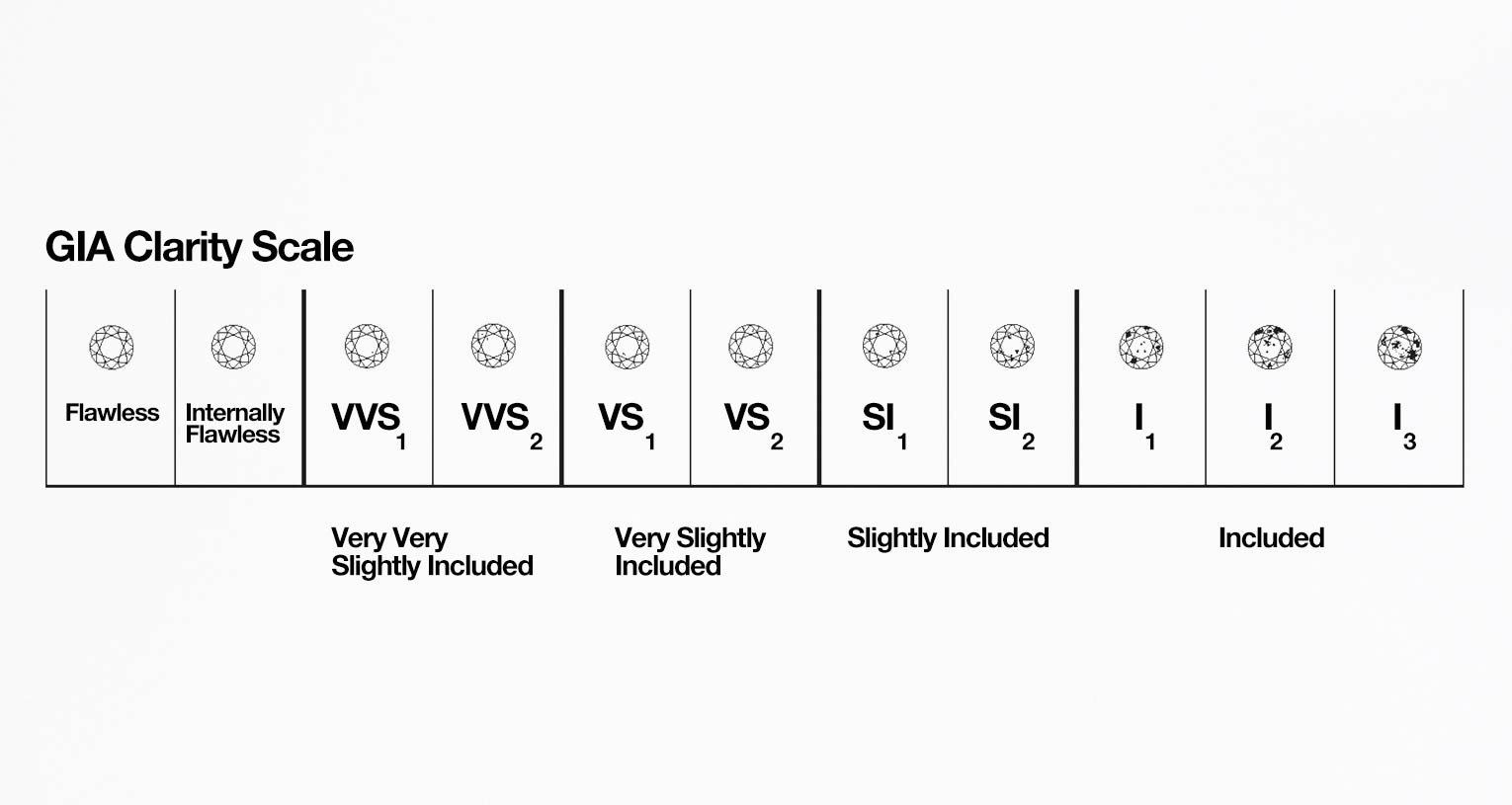
Clarity evaluates internal inclusions and external blemishes.
Grades range from:
- Flawless (FL)
- Internally Flawless (IF)
- VVS1-VVS2
- VS1-VS2
- SI1-SI2
- I1-I3
Carat
Carat measures weight, not size - though larger carat diamonds typically appear bigger and command higher value.
What Diamond Grading Means for Buyers
Diamond grading is not just technical data. It directly impacts three things that matter most to buyers:
1. Price Transparency
Two diamonds may look similar, but grading reveals why one costs significantly more.
Grading explains:
- Why a 2.00ct diamond might be cheaper than a 1.80ct
- Why certain clarity grades command premiums
- Why cut quality often matters more than size
2. Protection from Overpaying
Without a reputable grading report, buyers are vulnerable to:
- Inflated quality claims
- Inaccurate comparisons
- Hidden treatments
Grading ensures you are paying for what you are actually getting.
3. Long-Term Value
For collectors and investors, grading determines:
- Resale liquidity
- Trade value
- Market recognition
A GIA-certified diamond retains credibility across global markets, from Dubai to Antwerp to New York.
Diamond Grading in Dubai: What Buyers Should Know
Dubai has become one of the world’s most important diamond trading hubs. With its tax advantages, global access, and growing luxury market, buyers now have unprecedented choice - and responsibility.
In such a competitive environment:
- Not all diamonds are graded equally
- Not all certificates carry the same weight
- Not all sellers disclose the same level of detail
Buyers should always:
- Request original GIA reports
- Verify certificate numbers online
- Understand the grading language
- Compare multiple stones objectively
This is especially important when purchasing bespoke engagement rings in Dubai, where design, craftsmanship, and diamond quality must align perfectly.
(Internal link suggestion: bespoke engagement rings in Dubai → /bespoke-engagement-rings-dubai)
Natural vs Lab-Grown: Grading Differences
Both natural and lab-grown diamonds are graded using similar 4C frameworks. However, there are important distinctions.
Natural diamonds:
- Are billions of years old
- Retain rarity and long-term value
- Trade as investment assets
Lab-grown diamonds:
- Are chemically identical
- Cost significantly less
- Depreciate faster
- Are produced at scale
While both may receive grading reports, natural diamonds remain the preferred choice for long-term value, legacy, and collectability.
(Internal link suggestion: natural diamonds → /natural-diamonds-dubai)
How to Read a Diamond Grading Report Like a Professional
A grading report may look complex, but professionals focus on:
- Proportions: table %, depth %, crown angle
- Inclusion placement: location matters more than size
- Fluorescence: can impact appearance and value
- Symmetry and polish
- Comments section: reveals treatments or remarks
Understanding these details allows buyers to move beyond surface grades and evaluate true performance and beauty.
The Future of Diamond Grading
Diamond grading continues to evolve.
Future developments include:
- Greater AI-assisted grading
- Real-time blockchain tracking
- Digital certification passports
- Enhanced treatment detection
The goal remains unchanged:
To protect buyers through transparency, consistency, and trust.
As technology advances, the most valuable asset in diamond grading will still be what it has always been: expert human judgment backed by ethical standards.
Why Expert Guidance Still Matters
Even with perfect grading systems, interpreting diamonds remains an art.
Two diamonds with identical grades can:
- Look completely different
- Perform differently in light
- Feel different emotionally
This is where working with a trusted diamond advisor becomes invaluable - especially for bespoke pieces, engagement rings, or significant investments.
Frequently Asked Questions (FAQs)
What is diamond grading?
Diamond grading is the professional evaluation of a diamond’s quality based on cut, color, clarity, and carat, issued by independent gemological laboratories.
What is the most trusted diamond grading lab?
The Gemological Institute of America (GIA) is considered the most respected and consistent grading authority worldwide.
Does diamond grading affect price?
Yes. Grading directly impacts a diamond’s value, resale potential, and market recognition.
Are diamond grading reports accurate?
Reports from reputable labs like GIA are highly accurate and internationally trusted.
How can I verify a diamond certificate?
Most labs allow you to verify certificate numbers directly on their official websites.
Is diamond grading the same for natural and lab-grown diamonds?
Both use similar grading frameworks, but natural diamonds retain stronger long-term value and rarity.
Why is diamond grading important for engagement rings?
Grading ensures transparency, protects buyers from overpaying, and guarantees the true quality of the stone.
Final Thought
Diamond grading is not just a technical process - it is the foundation of trust in the modern diamond industry.
For buyers in Dubai and beyond, understanding grading means:
- Making smarter decisions
- Protecting long-term value
- Appreciating true quality beyond surface beauty
In a world where luxury is increasingly defined by knowledge, the most valuable diamond is an informed one.
